By Mariatou Ngum and Abdou Mbye
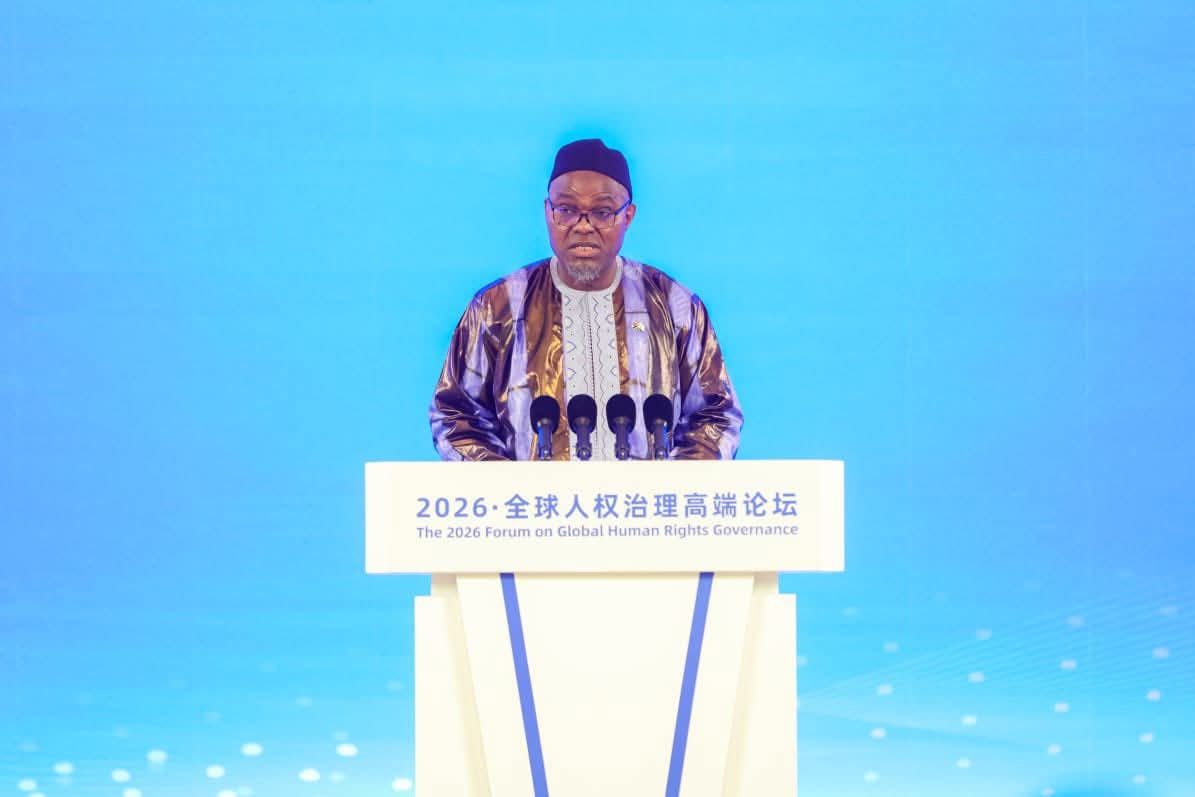
The 2026 Forum on Global Human Rights Governance opened in Beijing on Thursday, bringing together more than 200 officials, experts and representatives from different countries, along with delegates from the United Nations and other international and regional organisations.
The two-day forum, held to mark the 40th anniversary of the United Nations Declaration on the Right to Development, is focused on the theme of promoting human rights through development. Participants are exchanging views on global governance and exploring how development, international cooperation and shared prosperity can advance human rights protection worldwide.
Among the speakers was His Excellency Mohammed BS Jallow, Vice President of the Republic of The Gambia, who addressed the forum on the topic of Green Development and the Protection of Human Rights.
VP Jallow warned that the climate crisis is no longer a distant threat, noting that The Gambia is among the countries most vulnerable to climate change despite contributing negligibly to global greenhouse gas emissions. He said coastal communities face growing threats from sea level rise and erosion, while farmers confront changing rainfall patterns and declining agricultural ĺproductivity.
“There can be no sustainable development without environmental protection, and there can be no meaningful protection of human rights without sustainable development,” he told delegates.
The Vice President argued that green development is not merely an environmental agenda but a human rights imperative, linking climate change to threats against the rights to health, food, housing and security. He called on wealthy nations to honour their responsibility by supporting climate finance, technology transfer and capacity building for developing countries.
VP Jallow also outlined five principles he said should guide a new vision for global human rights governance: human dignity, equity, participation, accountability and solidarity.
He closed by urging the international community to build a future where development and human rights are not competing objectives but mutually reinforcing pillars of human progress.